
Career Decision Making: 100 questions to ask
How are people (especially young people) thinking about their career decisions and plans?
Consideration for this has never been more important.
After 10,000 hours of practice as a Career Development Professional, I have long considered the following:
Y-axis: “Inward” ↕ “Outward”. This represents focus or orientation.
- Inward: introspection, personal values, self-reflection, private reasoning.
- Outward: social awareness, external expectations, environmental feedback, others’ influence.
X-axis: “Rational” ↔ “Emotional”. This represents a mode of thinking.
- Rational: logic, data, structure, analysis.
- Emotional: feelings, intuition, empathy, gut reactions.
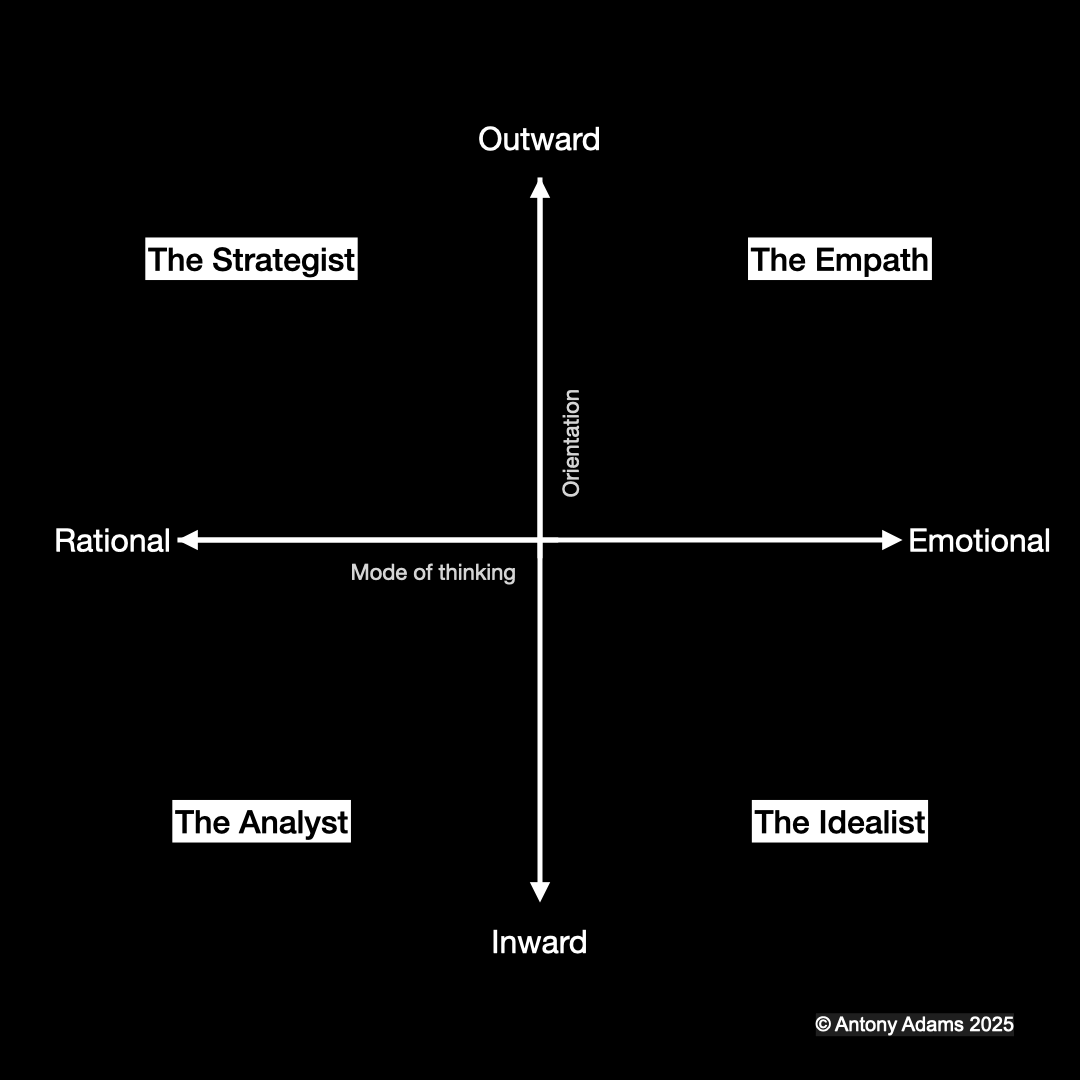
You might hear students say the following:
“I want to work in Engineering because there are loads of jobs and my parents say it’s a good career. Possibly “outward-rational”.
Or they might say something like:
“I really like the idea of becoming an engineer because I am happiest when designing and creating things. It makes me happy. Possibly “Inward – emotional”.
They then might say the following:
“I really like the idea of becoming an engineer because I am happiest when designing and creating things. It makes me happy. My Dad said it’s a good job, and I see lots of opportunities in Engineering. That’s “Inward-emotional”, but with some awareness of “outward-rational”
You could go on to ask, “is it important to do what your Dad wants”? The student might say, “My Dad said I am free to choose and will support me”. Just in those moments, you have moved around the quadrants.
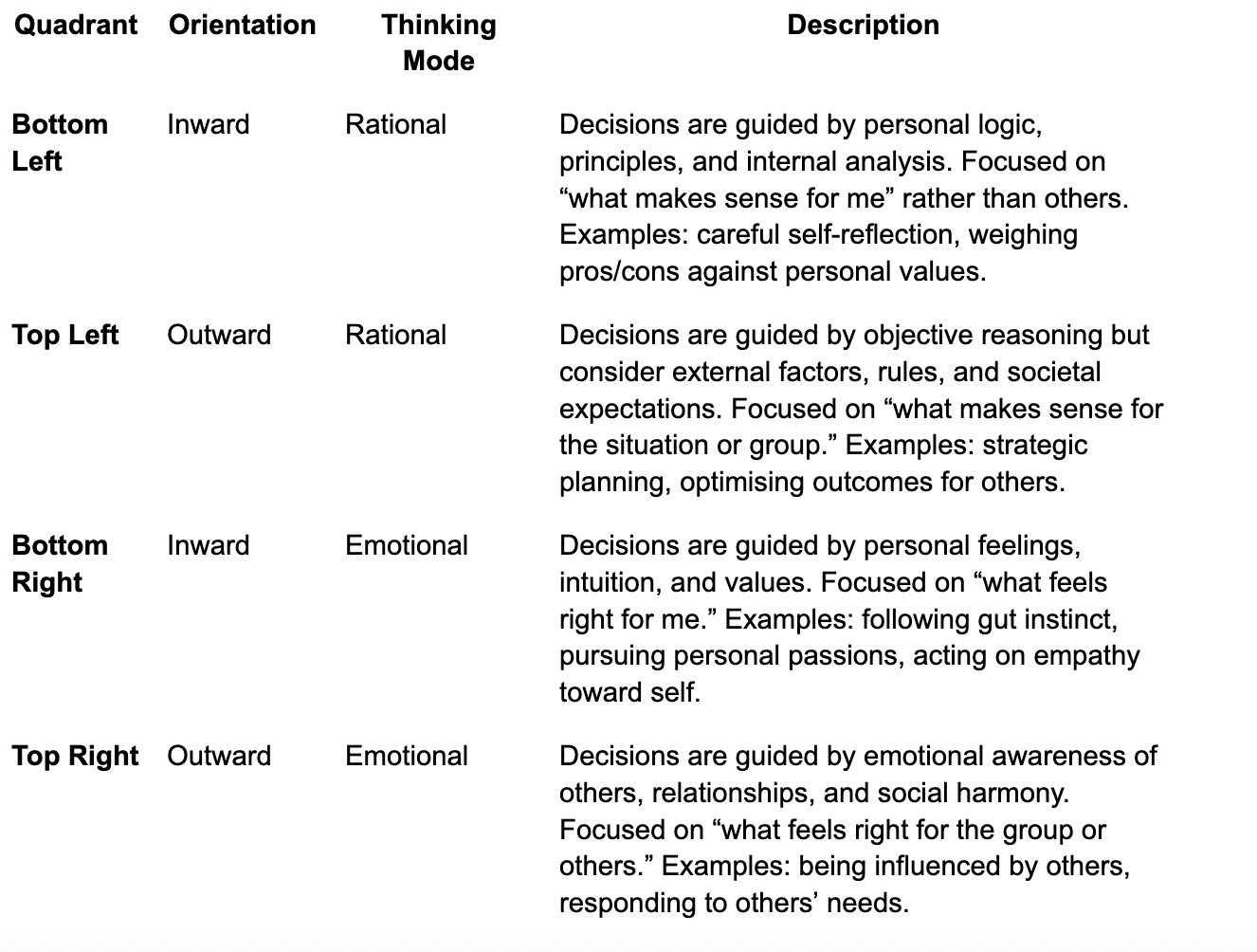
I have summarised the four groups:
- The Analyst: logical self-reflection
- The Strategist: logical but externally aware
- The Idealist: feeling-driven self-reflection
- The Empath: feeling-driven social awareness
A successful career involves being able to move freely between the quadrants before, during, and after making decisions. However, at times, we may find ourselves in one particular quadrant, often shaped by an influence, situation, or stage in life, and this can leave us feeling stuck.
I have put together 100 questions to ask for educators, parents and other key people to use. I hope you find the 100 questions useful.
You can access the file 100 Questions.
I created three products that will transform your career practice and programme. Follow me on LinkedIn for the latest updates.